Cappelletti is a convention that is used to interfere over the opponents 1NT opening. It is strikingly similar to Multi Landy, the only difference is that two bids are changed around. I will start off by exploring the convention thoroughly and then comparing its strengths and weaknesses with Multi Landy so you can decide which, if any, you adopt.
What the bids mean
After the opponents open 1NT the bids are as follows
- X = 15+ high card points, a variety of shapes. Discuss what subsequent doubles are with your partner, it is common and quite useful to play the next double by either play as takeout, and if a third double appears on the table - that is penalty.
- 2♣ = A single suiter, typically 6+ card suit.
- 2♦ = Both majors.
- 2♥ = 5 Hearts and a 4+ card minor.
- 2♠ = 5 Spades and a 4+ card minor.
- 2NT = both minors.
On 2♦ (both majors): The exact length is up for discussion with you and your partner. A sensible recommendation is 5-5 in the majors when vulnerable and at least 5-4 when not vulnerable. That ensures landing on your feet more often when you are vulnerable, and maybe even finding a game. Some people play it as 5-4 when vulnerable, but at least consider suit quality when doing that as you may end up in a 4-3 fit, or even rarely a 4-2.
On 2NT (both minors): I recommend 5-5 in both, but perhaps when you are not vulnerable you could consider doing it with well textured 5-4 shape.
Common responses
Those are the first round bids, lets look at some of the common responses you need to be aware of.
After partner bids 2♣, showing a single suit
2♦ by you is the default response pass or correct - (Pass this if your suit is diamonds, otherwise correct to your long suit). If you have a 6+ card well textured suit of your own, and prefer bidding that, you can. That will be rare, most of the time you will respond 2♦.
Note: You might later raise partner's suit, depending what it is, for example
You initially only bid 2♦, mostly expecting partner to bid 2♥ which you intended to pass (expected that because its your shortest suit so will often be partner's longest suit). Once you find out you actually have a great spade fit, your hand becomes excellent, and you can raise to 4♠.
After partner bids 2♦, showing both majors
With an ordinary hand, the majority of the time, you should just bid your longest major on the 2 level, and get ready to play there, unless the opponents compete. However, if you have a good hand you can bid 3 of that major instead as invitational, or even 4. Keep it simple and natural.
If instead of bidding 2 of a major you bid 3♣, it shows a 6+ quality suit, for example
Note: with a similar quality diamond suit, you can just pass 2♦!
After partner bids 2♥ or 2♠, showing 5 card major and a minor
When you have 2 cards in the major, you will frequently pass unless you have at least 4 in each minor (you cant afford to ask which minor partner has unless you can play in either). With 3 cards in the major you can again just pass, or raise with a very good hand.
If you want to correct to the minor, there are various ways people play, this is a common way
2NT = Potentially game interest in at least 1 of the minors, and/or possibly interested in 3NT.
Partner now bids 3 of their minor with a minimum hand. Otherwise partner can bid
- 3♥ = good hand with clubs as the second suit
- 3♠ = good hand with diamonds as the second suit
Note: It is important to clarify quickly what the minor is as partner needs to know!
3♣ = pass or correct - that is going to be a common bid, for example
Here you are saying to partner that obviously you don't want to play in 2♠, but are happy to play in either 3♣ or 3♦, whatever their suit is.
Comparison with Multi Landy
The only difference is that the 2♣ and 2♦ bids are switched, everything else is the same.
Advantage of Cappelletti
The main advantage of Cappelletti is that you can bid a hand with diamonds. You would overcall 2♣, showing a single suiter. Whereas in Multi Landy, there is no such bid, you would have to bid 3♦ which should require a better and/or more distributional hand.
Advantage of Multi Landy
The main advantage of Multi Landy is that when you bid 2♣ for the majors, you have more room (compared with bidding 2♦ for the majors in the other system). This allows partner to use the bid 2♦ to say, "bid your better major".
So, for example
Partner is 3-3 in the majors and has asked you to bid your longest one, you've now landed in your 5-3 fit. Contrast that with Cappelletti which would go as follows
Partner just has to guess with 3-3 in the majors, they don't have the room to say "bid your longest one".
Recommendation
I play Multi Landy and prefer it for the advantage just mentioned there - the frequency and significance of bidding the majors to me is worth more than being able to bid natural diamonds on the 2 level. However, as always what you and your partner prefer is a more important consideration - both are very playable systems and are used by experts all around the world. My suggestion is to try whichever system appeals to you or suits your style.
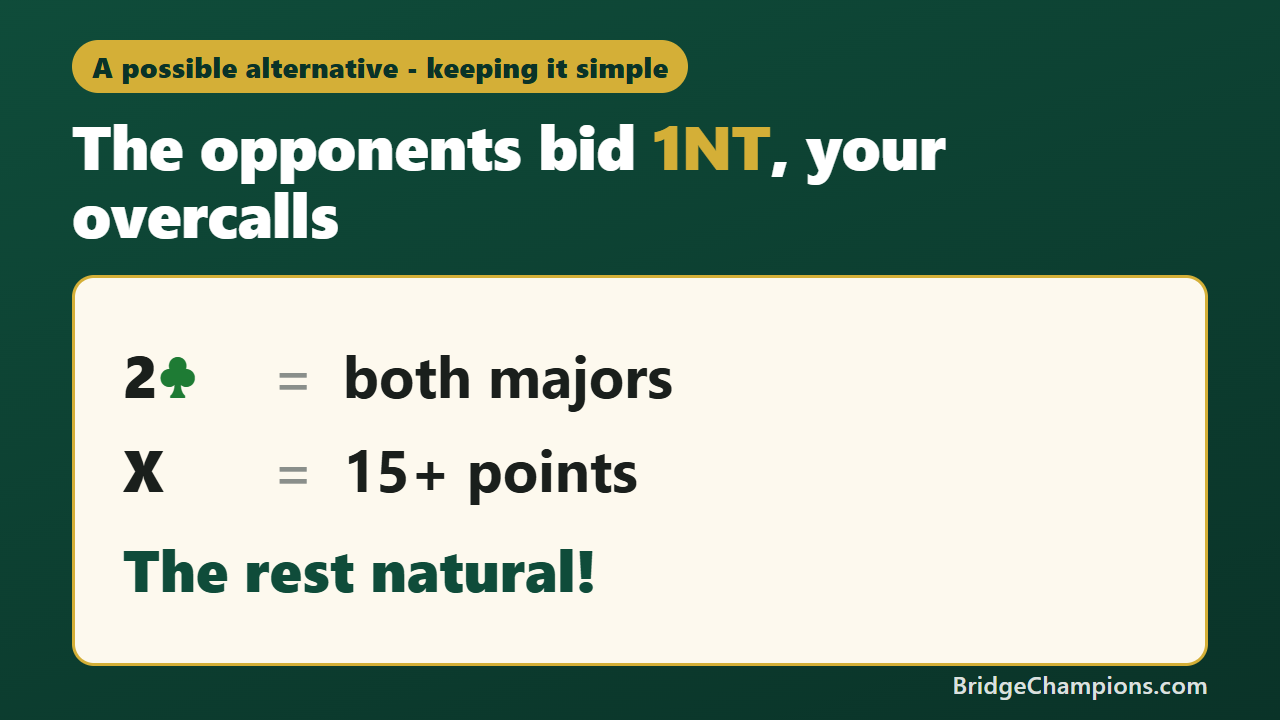
This is what many top experts are doing.
Get my #1 tip for improving your scores straight away.